|
Tangible Results |
Operational Impact |
|---|---|
|
|
How a Grant-Writing Business Went from a Half-Built System to a CRM That Finally Fits
Two years in, the work was thriving. The backend wasn’t keeping up. Here’s how we built a system that could grow with her.
The Client
Ginny is a 20-year fundraising strategist, two years into building her own grant-writing business. To date, she’s helped raise over $4 million for nonprofits focused on education, youth, and workforce development. The work is meaningful. The backend? That was a different story.
The Situation
Ginny was running her business across four tools: ClickUp, MoxieCRM, CopperCRM, and Airtable. On paper, that sounds like a lot of infrastructure. In practice, it meant that every time a prospect moved through her pipeline, someone had to manually move information with them - copying, re-entering, double-checking. Nothing was connected. Nothing could be trusted as the real version.
She’d already tried to fix it. She’d invested in a course-based Airtable ecosystem designed to replace the patchwork - and the logic made sense. But the course was built for coaches. Ginny’s business is grant writing. Every time she tried to apply the framework to her actual workflow, she hit a wall. The terminology didn’t fit. The stages didn’t map right. What worked in the examples didn’t translate.
When she hit the Zapier automation stage, things stalled completely. Not because she wasn’t capable of figuring it out - but because she was trying to build something that didn’t quite exist yet: a coaching template, bent into the shape of a grant-writing business, wired up to automations she hadn’t fully configured yet. The pieces were all there. They just didn’t fit together. By the time we connected, the system felt fragmented - because it was.
The Goal
The goal wasn’t to build something complicated. It was to build something that actually worked - one connected Airtable ecosystem where every single stage of the client journey lived in the same place.
Think of it like setting up a well-organized planner: every section has a purpose, every piece of information has a home, and nothing gets lost in a notebook from three years ago that you’re not sure you still have.
That meant three core pieces:
Prospect Management & CRM - high-touch experience from discovery call to signed contract, and proposals and contracts created without the back-and-forth.
Grant Tracker/Client Hub - managing active clients from onboarding through offboarding, including each client’s grant projects & tracking.
Internal Project Management - a home base for the growing team, so operations keep running smoothly
The Strategy
Before building anything, I needed to understand the methodology behind the course - what it was designed to do, and where the coaching framework needed to flex for a grant-writing business.
We scheduled a VIP day call with the course’s implementation team to get under the hood. That conversation was the turning point. It clarified what to keep, what to adapt, and what to let go of entirely.
From there, the approach was straightforward: merge the course template with Ginny's existing work, translate the coaching-specific framework into grant-writing workflows, and simplify before automating.
Getting the structure right first meant the automations actually had something solid to build on.
The Results
The result was an Airtable ecosystem Ginny actually uses - one that fits the way her business works, not how a course assumed it would. The main quest is complete. The side quests are ready when she is.
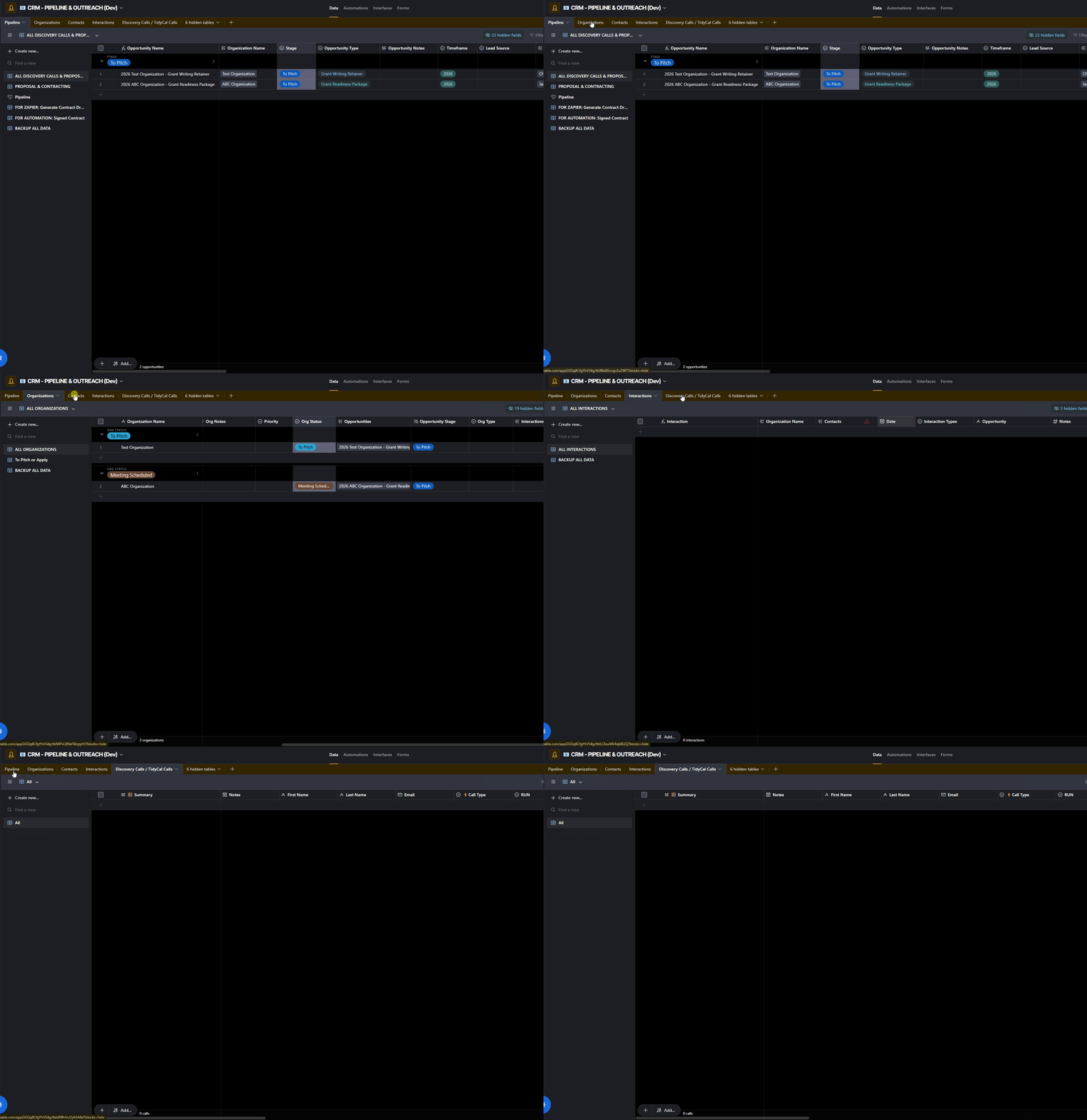
From Discovery Meeting to Contracting, Prospects All Live in The Same Operational Ecosystem as The Rest of Their Business
… Goodbye CopperCRM!
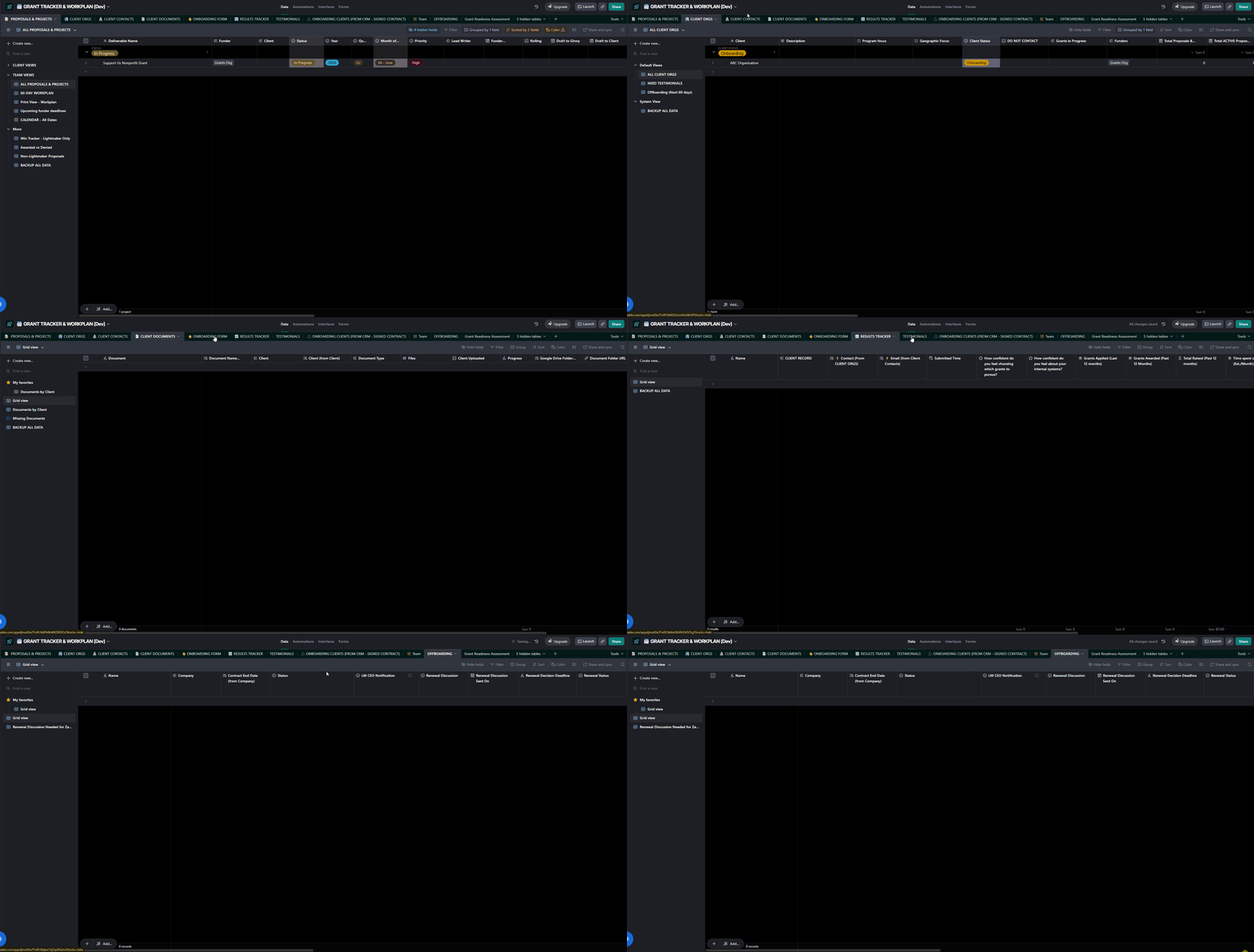
From Onboarding to Grant Applications to Offboarding - All in One Hub. The Client Experience Finally Has a Home Base
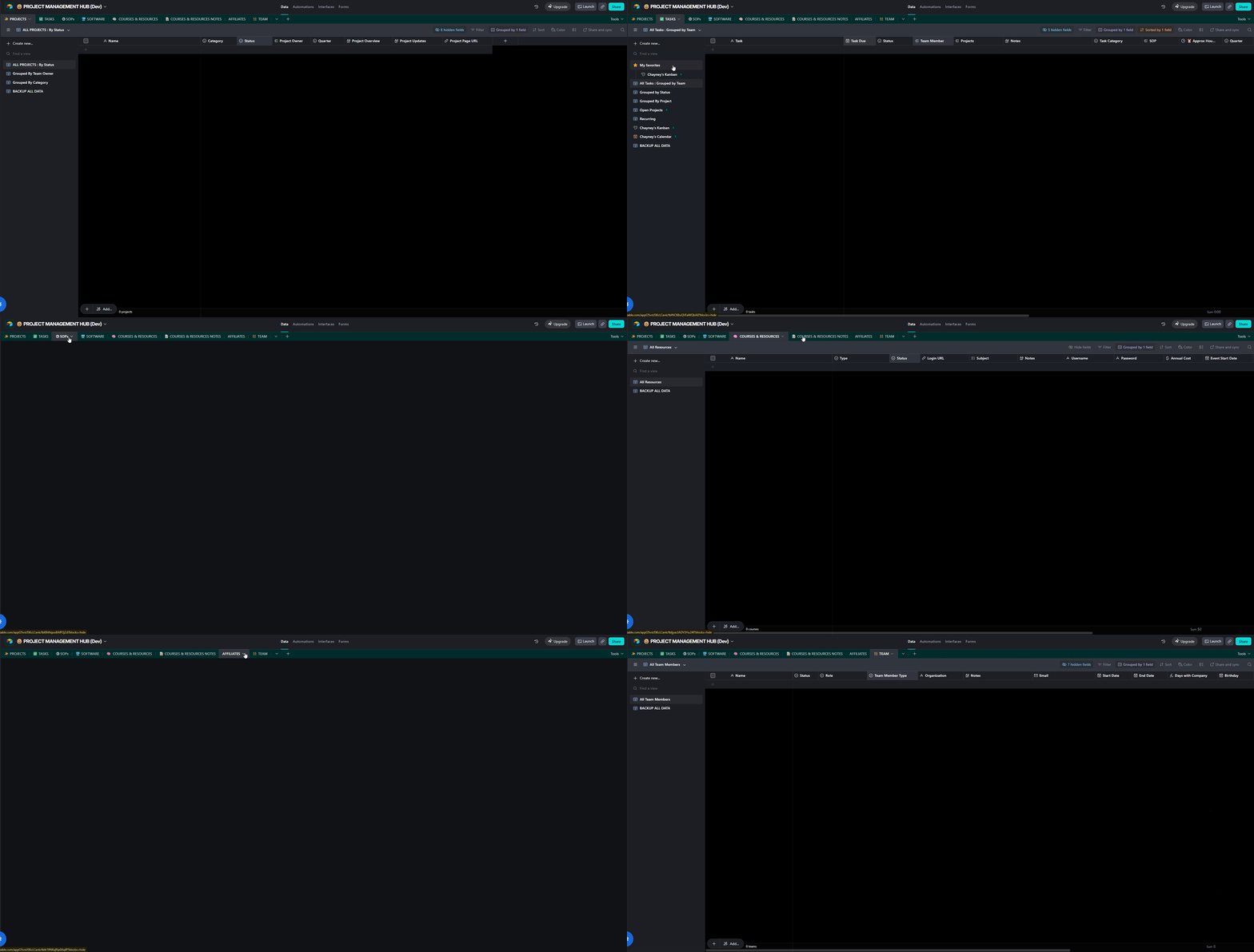
Every Task. Every Project. Every Team Member. One Board to Rule Them All.
The main quest is yours. The backend setup? That's mine. Let's talk!
